








Buying a product once is no longer the only way customers pay for value. Today, people subscribe to entertainment platforms, software, fitness programmes, meal services, digital newspapers and even household products. Instead of making a single payment, they pay regularly to continue receiving access, products or services.
This system is known as the subscription business model. It gives customers convenience and continuous access, while businesses receive recurring revenue. However, companies must keep delivering value because customers can cancel when they feel the service is no longer useful.

What Is a Subscription Business Model?
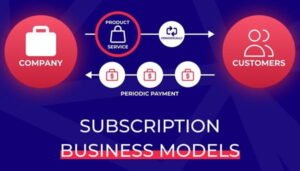
A subscription business model is a system in which customers pay a recurring fee to access a product or service for a particular period.
Payments may be collected weekly, monthly, quarterly or annually. The subscription usually continues until the customer cancels it or the agreed period ends.
For example, a customer may pay a monthly fee to watch films on a streaming platform. A business may pay annually to use accounting software. A household may subscribe to receive groceries or personal-care products regularly.
Unlike a traditional sales model, where the customer pays once and owns the product, the subscription model creates an ongoing relationship between the company and the customer.
The business must continue providing value throughout the subscription period. This may include fresh content, regular deliveries, product updates, customer support or access to useful features.
How Does the Subscription Business Model Work?
The company first creates a product or service that customers may need repeatedly. It then offers one or more subscription plans based on features, quantity, access level or billing period.
Customers select a suitable plan and provide payment details. The company automatically charges them according to the chosen schedule.
Depending on the business, customers may receive:
- Continuous access to software or digital content
- Regular delivery of physical products
- Membership benefits and special discounts
- Professional services at fixed intervals
- Premium support or exclusive features
Many businesses offer monthly and annual plans. Monthly plans provide greater flexibility, while annual plans are usually offered at a discounted price.
Some companies also provide a free trial so that customers can test the service before subscribing. Others use introductory discounts to attract new members.
The company earns recurring revenue as long as subscribers continue paying. Therefore, customer satisfaction and retention are extremely important.
Common Types of Subscription Business Models
1. Access Subscription
In this model, customers pay for continued access to digital content, software or a service.
Examples include streaming platforms, online newspapers, educational websites and cloud-based business tools.
The customer usually does not own the content or software. Access continues only while the subscription remains active.
2. Product Replenishment Subscription
This model delivers products that customers need regularly.
Common examples include groceries, shaving products, pet food, medicines, beauty items and household supplies.
Customers benefit because they do not have to place the same order repeatedly.
3. Subscription Box
A subscription box contains a selection of products delivered at regular intervals.
Boxes may include books, snacks, cosmetics, clothing, toys or health products. Some businesses personalise the contents based on customer preferences.
The surprise and discovery element is often an important part of the experience.
4. Membership Subscription
Customers pay a recurring fee to receive special benefits.
These benefits may include discounts, free delivery, early access, exclusive products, loyalty rewards or entry to certain facilities.
Gyms, clubs, retail programmes and professional organisations commonly use membership subscriptions.
5. Service Subscription
In this model, customers pay regularly for ongoing services.
Examples include website maintenance, home cleaning, consulting, security monitoring, technical support and equipment servicing.
The business provides the service according to a fixed schedule or whenever the customer needs assistance.
6. Usage-Based Subscription
The customer pays a regular fee, but the final cost may depend on actual usage.
This model is common in cloud computing, telecommunications and business software. A basic fee may cover limited usage, while additional charges apply when the limit is exceeded.
Examples of the Subscription Business Model
A video-streaming service charging customers every month for access to films and television programmes is a common example.
Software companies also use subscriptions. Instead of selling software through a one-time licence, they charge monthly or annual fees for access, updates, data storage and support.
A meal-kit company may deliver measured ingredients and recipes to customers every week. A gym may charge members monthly for access to exercise equipment and fitness classes.
Other examples include:
- Music-streaming platforms
- Online learning memberships
- Cloud-storage services
- Digital newspapers and magazines
- Monthly beauty-product boxes
- Regular coffee or snack deliveries
- Website hosting services
- Business accounting software
- Home-security monitoring
- Vehicle or equipment maintenance plans
These examples show that subscription models can be used for both digital and physical products.
Advantages of the Subscription Business Model
1. Predictable Revenue
Recurring payments allow companies to estimate future income more accurately.
Predictable revenue makes it easier to plan hiring, marketing, product development and expansion.
2. Strong Customer Relationships
A subscription creates an ongoing connection between the business and its customers.
The company can learn about customer preferences, improve the service and offer more personalised experiences.
3. Higher Customer Lifetime Value
A loyal subscriber may continue paying for months or years.
This can make the total value of one customer much higher than the value of a single purchase.
4. Easier Inventory Planning
Product subscription companies can estimate how many items they need to prepare and deliver each month.
This may reduce overproduction, waste and unnecessary storage costs.
5. Convenience for Customers
Customers do not need to place repeated orders or make manual payments every time.
Products arrive automatically, while digital services remain available without interruption.
6. Opportunities for Upselling
Businesses can offer different plans, add-ons and premium features.
A basic subscriber may later move to a higher-priced plan as their needs increase.
7. Better Cash Flow
Annual subscriptions can provide companies with money in advance.
This strengthens cash flow and gives the business funds to improve its product or service.
8. Greater Customer Loyalty
Subscribers who regularly use a service may be less likely to switch to another provider.
Convenience, saved preferences and personalised recommendations can strengthen loyalty.
Disadvantages of the Subscription Business Model
1. High Customer Churn
Churn refers to customers cancelling their subscriptions.
A high cancellation rate can reduce revenue and make business growth difficult. Companies must continuously understand why users leave.
2. Constant Pressure to Provide Value
A customer may tolerate a weak one-time purchase, but a subscriber reviews the value repeatedly.
The company must continue updating content, improving features or maintaining product quality.
3. Difficult Customer Acquisition
Customers may hesitate to accept another recurring payment.
Businesses may need to spend heavily on advertising, free trials and discounts to attract subscribers.
4. Subscription Fatigue
Many customers already pay for several subscriptions.
They may cancel services to reduce monthly expenses, even when they like the product.
5. Complicated Pricing Decisions
A company must decide what to include in each plan and how much to charge.
Prices that are too high may discourage customers, while prices that are too low may make the business unprofitable.
6. Payment Failures
Subscriptions depend on automatic billing. Payments may fail because cards expire, bank accounts lack funds or payment details change.
The company may lose customers even when they did not intentionally cancel.
7. Expensive Customer Support
Subscribers expect quick and reliable support throughout their membership.
As the subscriber base grows, the company may need to invest heavily in customer service.
8. Cancellation Complaints
Customers may become frustrated when cancellation procedures are complicated or unclear.
Difficult cancellation policies can damage trust and harm the company’s reputation.
Subscription vs One-Time Purchase
In a one-time purchase model, customers pay once and receive a product or service. The business must continue finding new customers to generate revenue.
In a subscription model, customers make repeated payments. This creates recurring income but also requires the company to provide continuous value.
A one-time purchase may be more suitable for durable products that customers rarely replace. A subscription is usually better for services, frequently used products and regularly updated digital content.
Is the Subscription Business Model Profitable?
The subscription model can be highly profitable when customer payments are greater than the cost of acquiring and serving them.
Profitability depends on subscription price, operating expenses, customer retention and cancellation rates. A business may attract many subscribers but still struggle if customers leave after only a few months.
Successful subscription companies focus on customer experience, simple billing, useful features and regular improvements. They also track customer acquisition cost and lifetime value carefully.
The goal is not only to gain new subscribers. The company must keep existing customers satisfied for as long as possible.
Conclusion
The subscription business model allows customers to pay regularly for continued access to products, services or membership benefits. It is widely used in software, entertainment, retail, education, fitness and professional services.
Its main advantages include predictable revenue, stronger customer relationships, convenience and higher lifetime value. Its disadvantages include cancellations, subscription fatigue, payment failures and the constant need to provide value.
When a company offers something customers genuinely need on a recurring basis, the subscription model can create stable income and long-term growth. Its success depends on fair pricing, reliable service and a customer experience that gives subscribers a strong reason to stay.