








Imagine preparing tea and suddenly realising there is no milk at home. Visiting a nearby shop may take time, while ordinary online delivery may arrive too late. Quick-commerce platforms solve this problem by delivering groceries and everyday essentials within minutes.
Companies such as Blinkit, Zepto, Swiggy Instamart and BigBasket’s BB Now have made this model familiar to Indian consumers. Customers open an application, choose the required products and receive them from a nearby fulfilment centre. Blinkit currently offers thousands of products for rapid doorstep delivery, while Zepto, Instamart and BB Now provide similar services across their available locations.
Quick commerce offers speed and convenience, but it is not an easy business to operate. Companies must maintain local warehouses, accurate inventory, delivery workers and reliable technology while keeping the cost of each order under control.
What Is the Quick Commerce Business Model?
Quick commerce, also called q-commerce, is a retail business model in which customers order products online and receive them within a very short period.
It is a faster form of e-commerce. Traditional e-commerce may take one or more days to deliver an order, while quick-commerce companies aim to complete deliveries within minutes.
The model mainly focuses on frequently purchased products, including:
- Groceries and vegetables
- Milk, bread and eggs
- Snacks and beverages
- Personal-care products
- Cleaning supplies
- Baby-care products
- Medicines and wellness items
- Stationery
- Small electronic accessories
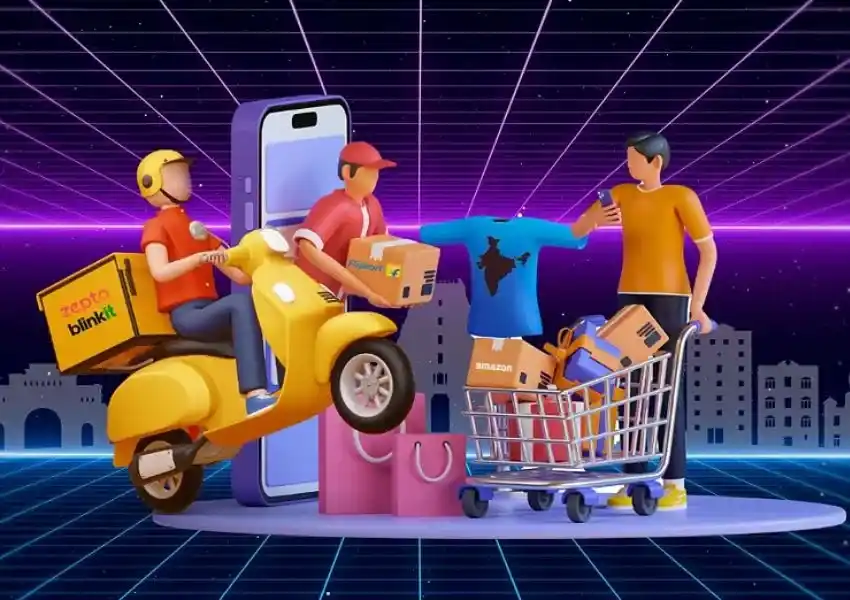
Customers normally place orders through a mobile application. Products are prepared at a nearby dark store and delivered by a delivery partner serving that area.
How Does Quick Commerce Work?
Quick-commerce companies divide cities into small service areas. Each area is supported by a local fulfilment centre, commonly called a dark store.
A dark store looks like a small warehouse or supermarket, but it is generally not open to walk-in customers. Its shelves are arranged so employees can find and pack online orders quickly.
The process normally follows these steps:
- The customer opens the application and enters a location.
- The application displays products available at the nearest dark store.
- The customer adds products to the cart and completes payment.
- Store employees receive the order digitally.
- A picker collects the products from the shelves.
- The order is checked, packed and assigned to a delivery worker.
- The delivery worker takes it to the customer.
Technology connects every part of the process. The platform must track stock, predict local demand, process payments, assign delivery workers and calculate suitable delivery routes.
Real-World Examples of Quick Commerce
Blinkit
Blinkit is one of the most recognisable quick-commerce platforms in India. Customers can use it to order groceries, fruits, vegetables, dairy products, personal-care goods, household supplies, stationery and small electronic items.
The products are generally supplied from nearby fulfilment centres. This short distance allows the company to complete deliveries much faster than traditional e-commerce businesses.
For example, a customer who needs milk, bread and cooking oil can place a single order through Blinkit instead of visiting several shops.
Zepto
Zepto is another major example of the quick-commerce model. It offers groceries, fresh produce, snacks, personal-care items, pet products and other daily necessities through its application and website.
Its local warehouse network helps the platform show customers only those products that are available close to their delivery address.
Swiggy Instamart
Swiggy Instamart operates as the quick-commerce division of Swiggy. It delivers groceries and products from several everyday categories through the wider Swiggy platform.
A customer can use the same application to order restaurant food or purchase household essentials from Instamart.
BigBasket BB Now
BigBasket’s BB Now provides rapid delivery of selected groceries and household essentials. Unlike BigBasket’s scheduled grocery-delivery service, BB Now focuses on more immediate requirements and offers delivery within a shorter period in supported areas.
Other Examples
Quick commerce is not limited to these four companies. The model can also be used by:
- Pharmacies delivering urgent medicines
- Supermarkets offering express local delivery
- Convenience-store chains accepting mobile orders
- Food platforms delivering ready-to-eat products
- Local retailers using their own delivery workers
- Businesses delivering flowers, gifts or electronics quickly
How Do Quick-Commerce Companies Make Money?
Product Margins
A company purchases products from suppliers and sells them at a higher retail price. The difference between the purchase price and selling price contributes to its revenue.
Delivery and Handling Fees
Customers may pay delivery, handling, platform or convenience fees. Charges may depend on the order value, location, demand or time of day.
Advertising Revenue
Brands pay quick-commerce platforms to place their products prominently in search results, category pages and homepage banners.
This can be an important revenue source because manufacturers want greater visibility inside popular shopping applications.
Subscription Memberships
Regular customers may purchase memberships that provide free delivery, special discounts or other benefits.
Seller Commissions
Platforms that allow outside sellers to list products may collect a commission on every completed order.
Private-Label Products
A quick-commerce company may sell products under its own brand. Private-label goods can provide stronger profit margins than some outside brands.
Advantages of the Quick Commerce Business Model
Fast and Convenient Delivery
Speed is the biggest advantage. Customers can obtain products without travelling to a shop or waiting for next-day delivery.
It is especially useful when an essential item is suddenly needed.
Simple Ordering Process
Customers can search, order, pay and track delivery through one application. Saved addresses and previous orders make repeat purchases easier.
Increased Sales Opportunities
Quick delivery encourages both planned and unplanned purchases. A customer ordering milk may also add snacks, beverages or personal-care items to the cart.
Better Understanding of Local Demand
Platforms collect data about products purchased in different neighbourhoods. This helps them decide what each dark store should stock.
Wider Reach for Brands
Manufacturers can reach customers through sponsored listings, discounts and prominent placement inside the application.
Smaller brands may also gain exposure without opening their own retail stores.
Extended Shopping Hours
Some platforms remain available late at night or for longer hours than nearby shops. This gives customers greater flexibility.
Disadvantages of the Quick Commerce Business Model
High Operating Costs
The company must operate many small warehouses close to customers. It must also pay for staff, technology, rent, electricity, packaging and delivery.
Difficulty Making a Profit
Quick-commerce orders are often small. The profit earned from a few grocery products may not fully cover picking, packing and delivery costs.
The company needs high order volume and careful cost management.
Limited Product Selection
A dark store has limited space. It cannot hold the same number of products as a large supermarket or traditional e-commerce warehouse.
Availability may also differ from one location to another.
Pressure on Delivery Operations
Traffic, rain, road conditions and building access can affect delivery times. Companies must avoid creating unsafe pressure on delivery workers merely to meet aggressive time targets.
Inventory Problems
Popular products may sell out quickly, while slow-moving or perishable products may remain unsold.
Poor inventory planning can lead to lost sales and wastage.
Environmental Concerns
Frequent delivery of small orders can increase packaging waste and the number of vehicles travelling through local areas.
Dependence on Technology
Application failures, incorrect stock information, payment errors or location problems can disrupt the ordering process.
Quick Commerce vs Traditional E-Commerce
Traditional e-commerce usually provides a much wider product range and delivers orders from large warehouses. Delivery may take one or more days.
Quick commerce stores fewer products close to customers and focuses on delivery within minutes. It is best suited to groceries and immediate daily requirements.
A customer may use traditional e-commerce to purchase a laptop or furniture but use Blinkit, Zepto or Instamart to order milk, vegetables or snacks.
Is Quick Commerce Profitable?
Quick commerce can become profitable when a company receives many orders from a small service area, maintains suitable product margins and controls delivery costs.
A higher average order value can improve profitability because several products are delivered during one trip. Advertising, memberships and private-label goods can also provide additional revenue.
However, rapid expansion does not automatically guarantee profit. A company must balance customer discounts, warehouse expenses, delivery costs and product wastage.
Conclusion
The quick-commerce business model provides rapid delivery of groceries and everyday essentials through mobile applications and nearby dark stores. Blinkit, Zepto, Swiggy Instamart and BigBasket’s BB Now are major examples of this model in India.
Its greatest advantages are speed, convenience, easy ordering and access to everyday products. Its disadvantages include high operating costs, limited product selection, inventory risks and difficulty earning profit from small orders.
Quick commerce is most suitable for densely populated areas where many customers value convenience. Its long-term success depends not only on fast delivery but also on responsible operations, reliable service and a sustainable path to profitability.