







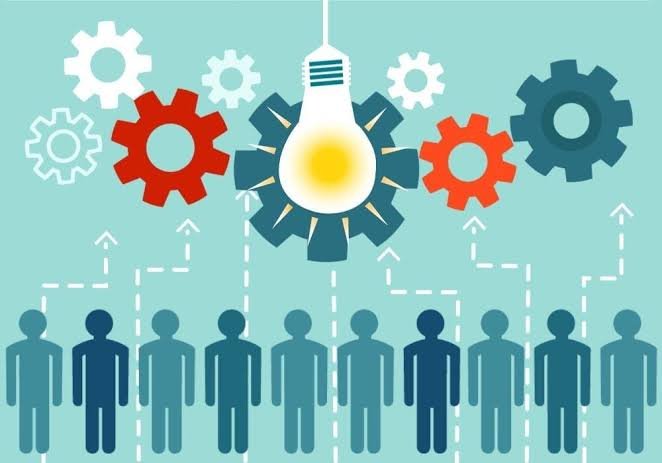
A company does not always need to depend only on its employees or a small group of experts to solve problems and create new ideas. It can invite a large number of people to contribute information, designs, skills, opinions or solutions through an online platform.
A business may ask customers to suggest new product ideas, invite freelancers to complete small tasks or allow users to create content for a digital platform. This approach is known as the crowdsourcing business model.
Crowdsourcing helps organisations access knowledge and creativity from a much larger group than their internal workforce. However, the company must manage participation, quality and ownership carefully.
What Is a Crowdsourcing Business Model?
A crowdsourcing business model is a system in which a company obtains ideas, services, information, content or solutions from a large group of people, usually through the internet.
The participants may include customers, freelancers, experts, volunteers or members of the general public. They may contribute for money, rewards, recognition, enjoyment or the opportunity to support a project.
For example, a company may invite people to submit designs for a new product. It then reviews the submissions, selects the best design and rewards the creator.
A navigation app that collects traffic information from its users is another example. Each participant contributes a small amount of information, but the combined data creates a valuable service.
How Does the Crowdsourcing Business Model Work?
A crowdsourcing company or organisation first identifies a task, problem or goal that can be opened to a wider group of people.
It then creates a clear request explaining what participants need to contribute. The request may involve submitting ideas, completing tasks, reporting information, testing a product or creating content.
The opportunity is published through a website, app, social media page or specialised crowdsourcing platform. Interested people register and submit their contributions.
The company reviews, combines or evaluates the submissions. In some cases, other users vote on the best ideas. In other cases, experts or automated systems check the quality.
Participants may receive cash payments, prizes, points, public recognition or access to the finished product. Some projects depend on voluntary participation and do not provide financial rewards.
The company earns value from the collected work, ideas or data. A crowdsourcing platform may generate revenue through service fees, subscriptions, commissions, advertising or corporate contracts.
Common Types of Crowdsourcing Businesses
Idea Crowdsourcing
Idea crowdsourcing allows customers or members of the public to suggest new products, services or improvements.
A company may ask people to submit ideas for packaging, product features, advertising campaigns or business solutions.
Microtask Crowdsourcing
Microtask platforms divide a large project into many small tasks that can be completed by different individuals.
Examples include categorising images, checking information, entering data, translating short passages and reviewing search results.
Creative Crowdsourcing
Creative crowdsourcing invites people to submit designs, photographs, videos, names, slogans or other creative work.
Businesses may use this model to find logo designs, product artwork or promotional content.
Knowledge Crowdsourcing
Knowledge crowdsourcing collects information and expertise from a large community.
Online encyclopaedias, question-and-answer platforms and community mapping projects commonly use this approach.
Crowdtesting
Crowdtesting allows a large number of users to test websites, apps, software or products.
Participants report technical errors, usability problems and performance issues across different devices and locations.
Open Innovation
Open innovation involves inviting people outside a company to help solve technical, scientific or business problems.
Organisations may offer rewards for successful solutions to challenges that their internal teams have been unable to solve.
Examples of Crowdsourcing Business Models
A community-based navigation platform is a common example of crowdsourcing. Drivers share information about traffic, road closures, accidents and travel conditions. The platform combines this data to provide updated routes.
An online encyclopaedia also uses crowdsourcing. Volunteers create, edit and improve articles, allowing the platform to build a large collection of information.
A design competition platform may allow businesses to request logos or packaging designs. Several designers submit their work, and the business selects and pays for its preferred option.
Other examples include:
- A company asking customers to vote on new product flavours
- A platform using freelancers to label images for technology projects
- A map service allowing users to report missing roads or locations
- A software company inviting users to report errors
- A fashion brand selecting designs submitted by its community
- A research organisation collecting observations from volunteers
- A website publishing photographs or videos submitted by users
These examples show that crowdsourcing can be used in technology, design, research, media, product development and professional services.
Advantages of the Crowdsourcing Business Model
1. Access to a Large Talent Pool
Crowdsourcing allows a company to reach people with different skills, backgrounds and experiences.
Instead of depending only on internal employees, the company can receive contributions from participants across different locations.
2. More Ideas and Solutions
A large group of people may produce a wider variety of ideas than a small internal team.
Different viewpoints can lead to creative solutions that the company may not have considered.
3. Lower Operating Costs
Crowdsourcing can reduce the need to hire permanent employees for every task. Businesses may pay only for completed work or successful solutions.
However, the company must still invest in platform management, evaluation and quality control.
4. Faster Completion of Large Tasks
A large project can be divided among many participants. Thousands of small tasks may be completed at the same time.
This can reduce the time required for activities such as data collection, product testing and content review.
5. Stronger Customer Engagement
Customers who contribute ideas or vote on products may feel more connected to the company.
This participation can increase loyalty and create interest before a product is launched.
6. Access to Real-World Information
Crowdsourcing can provide information directly from people in different locations.
Traffic reports, weather observations, local photographs and product feedback can be collected quickly from users.
7. Reduced Innovation Risk
A company can test ideas with a community before investing heavily in production.
Customer votes, comments and submissions may help the business understand which products are likely to attract demand.
Disadvantages of the Crowdsourcing Business Model
1. Inconsistent Quality
Contributions may vary greatly in accuracy and usefulness. Some participants may provide excellent work, while others may submit incomplete or incorrect information.
The company needs a reliable review and verification process.
2. Difficult Project Management
Managing hundreds or thousands of participants can be complicated.
The business must provide clear instructions, answer questions, evaluate submissions and distribute rewards fairly.
3. Confidentiality Risks
Opening a business problem to the public may reveal information about future products, strategies or technical challenges.
Crowdsourcing may not be suitable for confidential projects.
4. Intellectual Property Concerns
Disagreements may arise over who owns an idea, design or piece of content.
Companies should clearly explain ownership rights, payment terms and permitted uses before accepting contributions.
5. Limited Participant Commitment
Crowd participants may not have the same level of responsibility as permanent employees. They may leave tasks unfinished or stop participating without notice.
This can make project completion less predictable.
6. Risk of Unfair Compensation
Some platforms may offer very low payments for time-consuming work. This can create criticism and make it difficult to attract skilled contributors.
Fair rewards are important for maintaining trust and quality.
7. Possibility of Manipulation
Voting systems, reviews and public submissions may be influenced by fake accounts, organised groups or dishonest participants.
Platforms need security systems to detect fraud and protect the quality of results.
Crowdsourcing vs Outsourcing
The main difference between crowdsourcing and outsourcing is the source of the work.
In outsourcing, a company hires a particular external business or professional to complete a task. The responsibilities, price and deadlines are usually agreed upon in advance.
In crowdsourcing, the task is offered to a larger group of people. Several participants may contribute, compete or work on small parts of the same project.
Outsourcing generally provides greater control and accountability. Crowdsourcing can provide more ideas, wider participation and faster completion of large tasks.
Is the Crowdsourcing Business Model Profitable?
The crowdsourcing model can be profitable when a company can turn contributions from a large community into a useful product or service.
A platform may earn revenue by charging businesses to post projects, taking commissions from payments or offering premium subscriptions. Companies may also save money by collecting ideas, data or creative work more efficiently.
However, profitability depends on platform costs, participant rewards, quality control and the ability to maintain an active community.
Successful crowdsourcing businesses provide clear tasks, fair rewards, reliable evaluation and a simple participation process.
Conclusion
The crowdsourcing business model allows companies to obtain ideas, information, services and solutions from a large group of people. It is commonly used in design, technology, research, mapping, product development and digital content.
Its main advantages include access to diverse talent, faster task completion, lower costs and stronger customer engagement. Its disadvantages include inconsistent quality, confidentiality concerns, management difficulties and intellectual property risks.
For businesses that can organise participation and maintain quality, crowdsourcing can provide a practical way to solve problems, develop ideas and create valuable services.