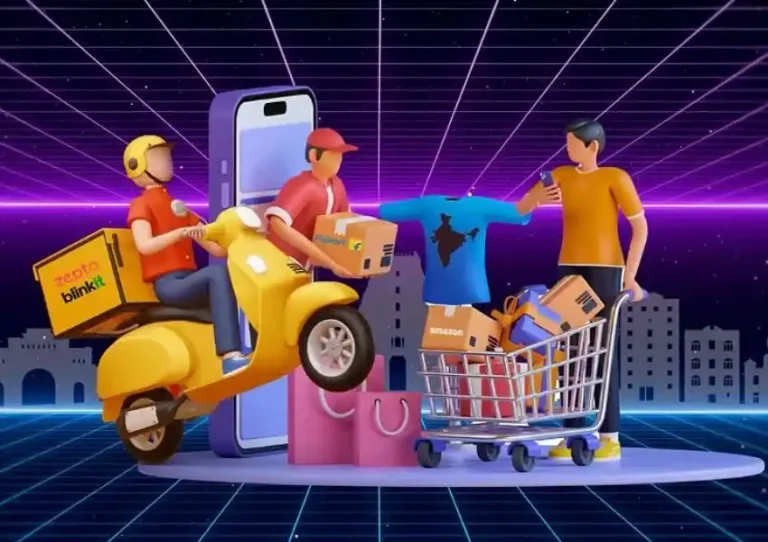










Delhivery helps online sellers, consumer brands, manufacturers and ordinary individuals move products from one location to another. Its work may begin with collecting a parcel from a seller, but the complete service can involve warehousing, sorting, long-distance transportation, last-mile delivery, payment collection and product returns.
The company does not normally own the products it transports. Instead, it earns fees for providing logistics infrastructure and technology. Customers pay according to factors such as shipment weight, distance, delivery speed, cargo type and the additional services required.
Delhivery has expanded from an e-commerce parcel-delivery company into an integrated logistics provider. Its operations now cover express parcels, part-truckload freight, full-truckload transportation, warehousing, international shipping and supply-chain technology.
Delhivery Company Quick Overview
| Particular | Details |
| Legal company | Delhivery Limited |
| Founded | 2011 |
| Founders | Sahil Barua, Mohit Tandon, Bhavesh Manglani, Suraj Saharan and Kapil Bharati |
| Headquarters | Gurugram, Haryana |
| Managing Director and CEO | Sahil Barua |
| Business type | Integrated logistics and supply-chain company |
| Main services | Express parcels, PTL freight, truckload, warehousing and international shipping |
| Indian population covered | Approximately 99.5% |
| Business customers served | More than 52,000 |
| Logistics infrastructure | Approximately 23 million square feet |
| FY26 revenue from operations | ₹10,508.31 crore |
| FY26 consolidated profit | ₹152.54 crore |
Delhivery was founded in 2011 and is led by co-founder Sahil Barua. Its current network has shipped more than 4.5 billion parcels, handled over nine million tonnes of freight and serves businesses across most of India.
The FY26 financial figures are consolidated and include Ecom Express after Delhivery completed its acquisition during July 2025. Delhivery reported audited revenue from operations of ₹10,508.31 crore and consolidated profit of approximately ₹152.54 crore for the year ended March 31, 2026.
What Is Delhivery’s Business Model?
Delhivery follows an asset-backed logistics platform model. It operates sorting centres, warehouses, gateways and delivery facilities while also working with delivery partners, truck owners and other transportation providers.
A seller or business connects its order system with Delhivery. When an order is ready, Delhivery collects the parcel and moves it through a network of local centres, regional hubs and transportation routes. The parcel is then delivered to the customer or returned to the seller when delivery is unsuccessful.
The company charges for completing this movement and for related services such as cash-on-delivery collection, warehousing, product inspection, tracking and return management.
Because several services use the same transportation and sorting network, higher shipment volumes can improve efficiency. A truck or facility that handles parcels from many customers can operate more economically than separate networks created for each business.
How Does Delhivery Make Money?
1. Express Parcel Delivery
Express parcel delivery is Delhivery’s largest business. It transports smaller packages for e-commerce marketplaces, direct-to-consumer brands, online sellers and other businesses.
Charges can depend on:
- Package weight and dimensions
- Pickup and delivery locations
- Delivery speed
- Cash-on-delivery requirements
- Product category
- Return risk
- Monthly shipment volume
Large customers may negotiate contract prices, while smaller sellers can use standard rates through Delhivery One.
Delhivery delivered approximately 1.05 billion express parcels in FY26. Express parcel revenue increased to around ₹6,685 crore, making it the largest contributor to company revenue.
2. Part-Truckload Freight
Part-truckload, commonly called PTL, is used when a business needs to transport goods that are too large for ordinary parcels but do not require an entire truck.
Delhivery combines freight from several customers in one vehicle. Each customer pays according to the weight, volume, route and service conditions of its cargo.
This model improves vehicle utilisation because several smaller consignments share the transportation cost. Delhivery handled nearly two million metric tonnes of PTL freight during FY26, while PTL revenue reached approximately ₹2,254 crore.
3. Full-Truckload Transportation
Full-truckload service is designed for businesses that need an entire vehicle to transport goods between factories, warehouses, distributors or retail locations.
Delhivery connects customers with verified trucks and drivers through its transportation network and technology platform. Its truckload service offers different vehicle sizes, real-time tracking and nationwide transportation routes.
The company earns from the difference between the amount charged to the customer and the transportation, driver, partner and operating costs involved in completing the trip. Delhivery’s truck-matching platform handles more than 20,000 trips per month.
4. Warehousing and Order Fulfilment
Businesses can store products in Delhivery fulfilment centres instead of operating their own warehouses.
When a customer places an order, Delhivery can:
- Locate the product
- Pick it from storage
- Pack the order
- Prepare shipping documents
- Dispatch the parcel
- Process eligible returns
The customer pays for storage space, manpower, order processing and related fulfilment services.
Delhivery operates more than seven million square feet of multi-tenant warehousing infrastructure. These warehouses are integrated with its parcel, freight and cross-border networks.
5. Supply-Chain Services
Large companies may require more than simple transportation. Delhivery provides customised supply-chain solutions covering factories, warehouses, distribution centres, retailers and end customers.
A consumer-electronics company, for example, may need Delhivery to manage inventory, distribute goods to stores and handle direct online orders from the same warehouse.
These contracts can include warehouse management, transportation, technology, inventory visibility and manpower. Delhivery earns service fees according to the size and complexity of the operation.
6. International and Cross-Border Shipping
Delhivery provides international parcel and freight services to more than 220 countries through its own network and global partners such as FedEx and Aramex.
Businesses may pay for door-to-door or port-to-port transportation, customs-related support, tracking and international fulfilment.
Cross-border prices depend on destination, package weight, transport method, customs requirements and delivery speed. International shipping can produce higher revenue per shipment, although airline, customs and overseas partner costs are also substantial.
7. Cash-on-Delivery and Return Services
Many Indian online orders are paid for through cash on delivery. Delhivery collects the amount from the buyer and later transfers it to the seller after applying the relevant settlement terms.
The complete cash collected is not Delhivery’s revenue. The company earns only the applicable logistics, collection or service charge.
Delhivery also handles return-to-origin shipments when a customer refuses an order or delivery repeatedly fails. Sellers may pay return transportation and handling charges, making reverse logistics another source of service revenue.
Returns can still reduce profitability because the parcel must travel through the network without producing a successful customer delivery.
8. Personal Courier and Small-Business Shipping
Individuals and small businesses can book domestic and international shipments through Delhivery’s app and digital platform.
The customer enters parcel details, checks the available price and schedules a doorstep pickup. Delhivery earns the shipping fee after covering pickup, transportation and delivery costs.
This service allows the company to serve smaller customers who do not have large monthly shipment contracts.
9. Technology and Value-Added Services
Delhivery provides tools that help businesses manage orders and improve delivery performance. These include branded tracking pages, customer communication tools, channel integrations and return-to-origin prediction.
Its technology can connect with platforms such as Shopify and WooCommerce. Delhivery also offers transportation-management and location-intelligence products.
Some tools may be bundled with logistics contracts, while others can support additional platform or service income. More importantly, the technology helps customers reduce failed deliveries and encourages them to send more shipments through Delhivery.
Delhivery’s Major Operating Costs
Transportation and shipment handling are Delhivery’s largest expenses. The company spent approximately ₹7,465.88 crore on freight, handling and servicing during FY26.
Other major expenses include:
- Delivery-partner and driver payments
- Fuel and long-distance transportation
- Sorting centres and warehouses
- Employee salaries
- Rent and lease payments
- Packaging and shipment handling
- Technology and automation
- Vehicle and equipment maintenance
- Customer support
- Failed deliveries and returns
Employee-benefit expenses were approximately ₹1,604.56 crore, while depreciation and amortisation reached ₹695.44 crore during FY26.
Why Delhivery’s Model Can Be Profitable
Logistics networks benefit from scale. When more parcels and freight move through the same facilities and transportation routes, fixed expenses can be spread across more shipments.
Delhivery’s FY26 service revenue reached ₹10,486 crore, while EBITDA before Ecom Express integration costs increased to ₹764 crore. The company also reported positive free cash flow of ₹89 crore.
Express parcels and PTL freight can also support each other by sharing gateways, transportation capacity and technology. Better route planning, automation and vehicle utilisation can reduce the cost of handling each shipment.
However, higher revenue does not guarantee strong profit. Delivery remains a low-margin business, and a large portion of customer payments must be used for transportation, labour and infrastructure.
Main Challenges in Delhivery’s Business Model
Failed deliveries and product returns increase costs because parcels must travel through the network more than once. Cash-on-delivery orders may have a higher rejection risk than prepaid orders.
Delhivery also competes with Blue Dart, Xpressbees, Amazon Transportation Services, Shadowfax, India Post and numerous regional logistics companies.
Fuel prices, wage increases, vehicle shortages and weak capacity utilisation can reduce margins. The company must maintain delivery speed while controlling expenses across thousands of locations.
The integration of Ecom Express creates another challenge. Delhivery must combine customers, employees, technology and facilities without causing service disruption or unnecessary duplication. The acquisition affected FY26 profit through integration costs and exceptional items.
FAQs
Q1. Does Delhivery own the products it transports?
No. Products generally belong to merchants, manufacturers or individuals. Delhivery earns for storing, transporting or delivering them.
Q2. Does Delhivery use only company-owned vehicles?
No. It uses a combination of its infrastructure, contracted vehicles, fleet partners and independent delivery partners.
Q3. Who normally pays Delhivery’s shipping charge?
The merchant or sender usually pays Delhivery. The merchant may separately charge delivery fees to the final customer as part of the shopping order.
Q4. Is cash collected on delivery counted as Delhivery’s income?
No. Cash-on-delivery money is mainly collected on behalf of the seller. Only Delhivery’s applicable logistics and collection charges become its revenue.
Q5. Why can shipping prices differ for two parcels travelling to the same city?
Prices may differ because of weight, dimensions, pickup location, service speed, product category, cash-on-delivery requirements and the sender’s contracted shipment volume.
Conclusion
Delhivery makes most of its money by transporting express parcels and part-truckload freight. Full-truckload transportation, warehousing, supply-chain contracts, international shipping and personal courier services provide additional revenue.
Its business depends on processing large shipment volumes through a shared network of sorting facilities, warehouses, vehicles and delivery centres. Technology helps the company plan routes, track parcels and reduce failed deliveries.
Long-term profitability will depend on improving network utilisation, controlling transportation expenses and integrating Ecom Express efficiently. Delhivery must continue growing shipment volumes without allowing freight, labour and infrastructure costs to rise at the same rate.