









NFTs and cryptocurrencies are both built using blockchain technology, but they are fundamentally different types of digital assets. Cryptocurrencies such as Bitcoin and Ether are generally designed to function as transferable digital assets, while non-fungible tokens (NFTs) represent unique digital or physical items recorded on a blockchain.
The confusion often comes from the fact that both use similar underlying technology. However, their purpose, structure, value and practical uses can be very different.
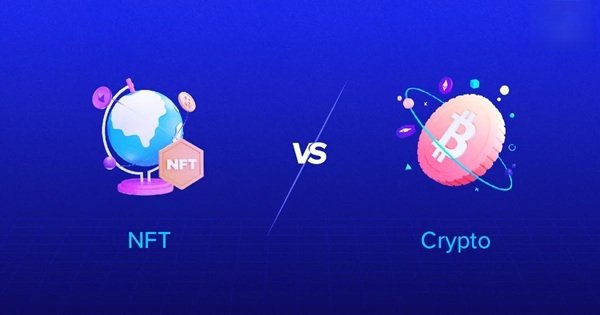
Understanding the distinction is important for anyone considering buying, selling or using digital assets. An NFT is not simply another name for cryptocurrency, and owning cryptocurrency does not automatically mean owning an NFT.
What Is a Cryptocurrency?
A cryptocurrency is a digital asset that operates using blockchain technology.
Bitcoin (BTC) is the best-known example. It was designed as a decentralised digital monetary system that allows value to be transferred without relying on a traditional central intermediary.
Ether (ETH) is another major cryptocurrency. It is the native asset of the Ethereum blockchain and is used to pay network fees and participate in the Ethereum ecosystem.
Other cryptocurrencies may be designed for payments, blockchain applications, governance or other digital functions.
One important characteristic of many cryptocurrencies is fungibility.
What Does Fungible Mean?
An asset is fungible when one unit can generally be exchanged for another equivalent unit.
For example, if you own 1 Bitcoin and someone else owns 1 Bitcoin, the two units are generally interchangeable in terms of their value.
Similarly, one ₹500 note can generally be exchanged for another ₹500 note.
This makes cryptocurrencies suitable for transferring value and, depending on the asset and jurisdiction, for certain payment or financial applications.
What Is an NFT?
NFT stands for Non-Fungible Token.
Unlike a fungible cryptocurrency, an NFT is designed to be unique or distinguishable from another token.
An NFT can represent ownership or rights associated with a particular digital or physical item, depending on the project and its legal structure.
Examples can include:
- Digital artwork
- Collectibles
- In-game items
- Membership passes
- Event tickets
- Digital certificates
- Virtual assets
- Certain real-world asset representations
The blockchain records the token and its ownership history, allowing users to verify certain aspects of the asset’s provenance.
However, owning an NFT does not automatically mean owning the copyright or every legal right associated with the underlying content.
NFTs Vs Cryptocurrencies: Key Differences
| Factor | Cryptocurrencies | NFTs |
| Nature | Generally fungible digital assets | Non-fungible/unique tokens |
| Main purpose | Value transfer, investment or network utility | Represent unique items, rights or access |
| Examples | Bitcoin, Ether | Digital art, collectibles, memberships |
| Interchangeability | Generally interchangeable | Each token can be distinct |
| Valuation | Market price of the cryptocurrency | Depends heavily on the specific NFT |
| Supply | Often large or predetermined | Usually limited within a collection/project |
| Main appeal | Liquidity, utility and investment | Ownership, uniqueness, access or collectibility |
| Major risk | Price volatility | Liquidity and valuation uncertainty |
Why NFTs Are Not Simply Another Cryptocurrency
The most important distinction is fungibility.
If you own 1 BTC, its identity generally does not matter when exchanging it for another 1 BTC.
With NFTs, individual tokens can have different characteristics.
Imagine a collection containing 10,000 NFTs. Two NFTs from the same collection may have different traits, rarity levels or attributes.
As a result, their market prices can differ significantly.
This makes NFTs more comparable to unique collectibles than to conventional units of currency.
Different Reasons for Buying Them
People may purchase cryptocurrencies because they believe the asset will appreciate, want to use a blockchain network or want exposure to digital assets.
NFT buyers may have different motivations.
They might purchase an NFT because they:
- Like the artwork
- Want membership access
- Want a particular collectible
- Expect the NFT to appreciate
- Want to use an item within a game
- Want access to an online community
- Want to establish blockchain-recorded ownership
The reason for buying therefore matters considerably.
An NFT purchased for collection or membership purposes should not necessarily be evaluated using the same framework as Bitcoin.
How NFT Value Is Determined
Cryptocurrency valuation is influenced by factors such as supply, demand, adoption, network activity, liquidity and market sentiment.
NFT valuation can be even more subjective.
An NFT’s value may depend on:
- Creator reputation
- Rarity
- Historical significance
- Community size
- Utility
- Brand recognition
- Buyer demand
- Provenance
- Scarcity
This can make NFT markets particularly difficult to value.
A digital artwork might sell for a large amount during a period of intense demand and later become difficult to sell at a similar price.
Liquidity Is a Major Difference
Major cryptocurrencies such as Bitcoin generally have substantially greater liquidity than most NFTs.
There are numerous cryptocurrency exchanges and trading platforms where major digital assets can be bought and sold.
NFT liquidity can vary dramatically.
A buyer may be interested in a particular NFT collection, but finding another buyer willing to pay the desired price can be difficult.
This means that an NFT’s displayed or previous sale price should not automatically be interpreted as the amount its owner can receive today.
NFTs Can Have Utility Beyond Investment
Another important distinction is that NFTs can provide access or functionality.
For example, an NFT could potentially function as:
- A membership credential
- A ticket
- A gaming asset
- A digital certificate
- Access to specific content
In these cases, the value of the NFT may come partly from what it allows the owner to do.
Cryptocurrencies can also have utility, but their use is generally connected to transferring value or interacting with the underlying blockchain ecosystem.
Ownership Does Not Always Mean Copyright Ownership
A common misunderstanding is that purchasing an NFT automatically gives the buyer copyright over the associated artwork.
That is generally not true.
An NFT may establish blockchain-recorded ownership of a particular token, while copyright and other intellectual-property rights remain with the creator unless they are specifically transferred or licensed.
Therefore, buyers should read the project’s terms carefully before assuming they have commercial rights over the underlying image, music or other content.
Risks of Cryptocurrencies
Cryptocurrencies can involve several major risks, including:
- Extreme price volatility
- Regulatory changes
- Cybersecurity risks
- Exchange failures
- Network risks
- Loss of private keys
- Fraud and scams
Even major cryptocurrencies can experience substantial price declines.
Smaller cryptocurrencies can carry considerably greater risks because of lower liquidity, weaker adoption and project-specific uncertainty.
Risks of NFTs
NFTs have many of the same blockchain-related risks but also face additional concerns.
These include:
- Very low liquidity
- Highly subjective valuations
- Fake collections
- Copyright disputes
- Creator-related risks
- Marketplace fraud
- Smart-contract vulnerabilities
- Loss of demand
- Changing consumer preferences
An NFT can also become difficult to sell even if the owner originally paid a significant amount for it.
Taxation in India
Indian investors should also consider the tax treatment of digital assets.
The Income Tax Department states that income from the transfer of Virtual Digital Assets (VDAs) is taxed at 30% under Section 115BBH, along with applicable surcharge and 4% cess. Relevant VDA transactions are reported through Schedule VDA in the income-tax return.
The exact tax implications can depend on the nature of the transaction and applicable rules. Investors should therefore maintain detailed records of purchases, sales and transfers of digital assets.
Which Is More Suitable for Investment?
Cryptocurrencies and NFTs serve different purposes, so the answer depends on the investor’s objective.
Cryptocurrencies may be more suitable for someone seeking:
- Exposure to blockchain networks
- Greater liquidity
- A relatively established digital-asset market
- Potential long-term price appreciation
- Fungible digital assets
NFTs may appeal to someone seeking:
- Digital collectibles
- Artwork
- Membership or access
- Gaming assets
- Unique blockchain-recorded items
Neither should automatically be considered a safer investment.
For investors primarily seeking liquidity and a more established market, major cryptocurrencies generally have an advantage over individual NFTs.
Conclusion
The NFTs vs cryptocurrencies comparison becomes much easier when their fundamental purposes are understood.
Cryptocurrencies are generally fungible digital assets. One unit of a particular cryptocurrency is generally interchangeable with another equivalent unit. Bitcoin and Ether are prominent examples.
NFTs are non-fungible tokens, meaning individual tokens can be unique or distinguishable. They can represent digital collectibles, artwork, memberships, tickets, gaming assets or other items and rights, depending on the project.
Their valuation also works differently. Cryptocurrency prices are largely driven by market-wide supply, demand, adoption and investor sentiment. NFT prices can depend much more heavily on rarity, creator reputation, community interest, utility and subjective demand.
NFTs can therefore offer unique forms of digital ownership and access, but they often have lower liquidity and greater valuation uncertainty than major cryptocurrencies.
For Indian users, both types of digital assets can also have tax implications under the VDA framework, including the 30% tax regime under Section 115BBH, plus applicable surcharge and cess.
Ultimately, an NFT is not simply a cryptocurrency with a picture attached to it. The two use blockchain technology for different purposes. Cryptocurrencies primarily focus on transferable digital value or blockchain utility, while NFTs focus on uniqueness, ownership, access and representation of specific assets or rights.
Understanding that difference is essential before deciding whether either type of digital asset belongs in a portfolio.