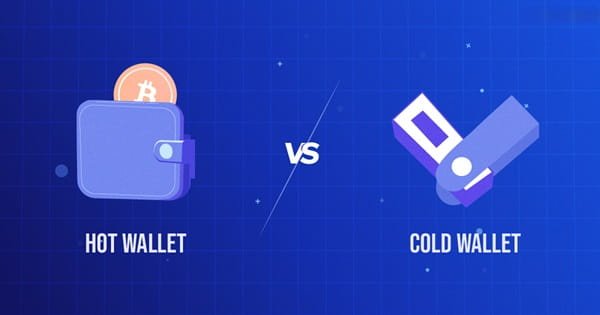








When people buy cryptocurrency, they often focus on which coin to purchase and at what price. But another important decision is where and how to store that cryptocurrency. A crypto wallet allows users to manage their digital assets, but not all wallets give users the same level of control.
The main distinction is between custodial and non-custodial wallets. In a custodial wallet, a third party—such as a cryptocurrency exchange or service provider—controls the private keys associated with the user’s assets. In a non-custodial wallet, the user controls the private keys and is responsible for securing them.
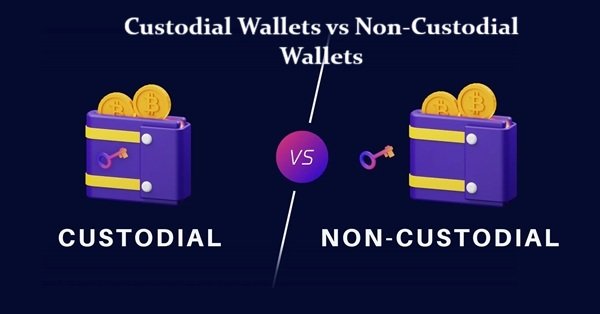
This difference can affect security, accessibility, recovery, privacy and the consequences of losing account credentials.
What Is a Crypto Wallet?
A cryptocurrency wallet does not usually store coins in the same way that a physical wallet stores cash.
Cryptocurrencies such as Bitcoin exist on their respective blockchain networks. A wallet provides the tools needed to interact with those blockchain addresses, including sending and receiving assets and managing the credentials that authorise transactions.
The most important concept is the private key.
A private key is a cryptographic credential that allows control over assets associated with a blockchain address. Whoever controls the relevant private key generally has the ability to authorise transactions from that address.
This is why the question “Who controls the private key?” is central to the custodial-versus-non-custodial debate.
What Is a Custodial Wallet?
A custodial wallet is a wallet arrangement in which a third party holds or controls the private keys on behalf of the user.
Cryptocurrency exchanges commonly use custodial arrangements. When a user buys Bitcoin on an exchange and leaves it in the exchange account, the platform may maintain custody of the underlying assets and manage the private keys.
The user accesses the account through credentials such as a username, password, passkey or two-factor authentication.
This arrangement is similar to using a traditional financial service: the user has an account and a claim or balance, while the service provider manages the underlying custody infrastructure.
Advantages of Custodial Wallets
1. Easier for beginners
Users do not necessarily need to understand private-key management immediately.
2. Account recovery
If a user forgets a password, the platform may provide account-recovery procedures, subject to its policies.
3. Convenient trading
Exchange-based wallets can make it easy to buy, sell, convert and transfer cryptocurrencies.
4. Security infrastructure
Established providers may use measures such as cold storage, multi-factor authentication, transaction monitoring and withdrawal controls.
Disadvantages of Custodial Wallets
The major disadvantage is that the user does not have complete control over the private keys.
If the platform experiences a security incident, becomes unavailable, restricts an account or encounters operational or financial problems, the user’s access may be affected.
There is also counterparty risk because the user depends on the provider to safeguard and make the assets available according to its terms.
Therefore, keeping cryptocurrency on an exchange should not automatically be treated as equivalent to holding the private keys personally.
What Is a Non-Custodial Wallet?
A non-custodial wallet allows the user to control the private keys directly.
The wallet software helps the user create and manage blockchain addresses, but the service provider does not normally hold the keys on the user’s behalf.
Non-custodial wallets can be:
- Mobile wallets
- Desktop wallets
- Browser wallets
- Hardware wallets
- Certain specialised cold-storage solutions
The user may receive a recovery phrase, often called a seed phrase, during wallet creation.
This phrase can be extremely important because it may allow the wallet to be restored on a compatible device if the original device is lost or damaged.
Advantages of Non-Custodial Wallets
1. Direct control
The user controls the private keys rather than relying on an exchange for custody.
2. Greater independence
Assets can often be managed without maintaining an account with a centralised exchange.
3. Blockchain access
Non-custodial wallets can interact directly with decentralised applications and blockchain networks where supported.
4. Reduced dependence on a single provider
The user’s ability to control the wallet does not necessarily depend on an exchange continuing to operate.
Disadvantages of Non-Custodial Wallets
The biggest advantage—control—is also the biggest responsibility.
If the user loses the recovery phrase or private key and has no valid backup, the assets may become permanently inaccessible.
There is usually no central customer-support department that can simply reset a lost private key.
A user who accidentally sends cryptocurrency to the wrong blockchain address may also have limited or no ability to reverse the transaction.
Custodial vs Non-Custodial Wallets: Key Differences
| Feature | Custodial Wallet | Non-Custodial Wallet |
| Private-key control | Third party | User |
| Account recovery | Usually available through provider | User responsible |
| Ease of use | Generally easier | Requires more responsibility |
| Counterparty risk | Higher | Lower dependency on custodian |
| Recovery phrase | Usually managed by provider | Usually controlled by user |
| Security responsibility | Shared with provider | Primarily user |
| Trading convenience | Usually high | Depends on wallet |
| Risk of losing access | Provider/account problems | Lost key or seed phrase |
| Decentralised applications | May be limited | Usually broader access |
| Best suited for | Beginners/convenience-focused users | Users wanting direct control |
Who Actually Controls Your Crypto?
The simplest way to understand the difference is:
Custodial wallet: “The platform controls the keys.”
Non-custodial wallet: “You control the keys.”
This is closely related to the popular crypto principle that users should understand who actually controls the private keys.
However, control also comes with responsibility.
If a non-custodial wallet gives you complete control, it also gives you complete responsibility for protecting the credentials that control your assets.
What Happens If You Lose Your Password?
The answer depends on the wallet type.
With a custodial wallet, forgetting a password may be recoverable through the provider’s identity verification and account-recovery procedures.
With a non-custodial wallet, the app password may not be the most important recovery mechanism. The recovery phrase or private key is generally critical.
If the device is lost but the recovery phrase is securely backed up, the wallet may be restorable on another compatible device.
If the recovery phrase is lost, however, recovery may be impossible.
Seed Phrase Security Is Critical
A recovery phrase should be treated as highly sensitive information.
Users should:
- Never share it with strangers
- Never post it online
- Avoid storing it in ordinary chat messages
- Be cautious about screenshots and cloud storage
- Verify wallet addresses before approving transactions
- Keep secure offline backups where appropriate
A legitimate wallet-support representative should not need the user’s recovery phrase to “unlock” their funds.
Anyone who obtains the recovery phrase may potentially gain control over the associated assets.
Which Wallet Is More Secure?
There is no universal answer.
A well-designed custodial service may have sophisticated security systems that a beginner would struggle to implement independently.
At the same time, non-custodial wallets eliminate dependence on a central custodian but transfer security responsibility to the user.
Security therefore depends on both technology and user behaviour.
A careless user can lose funds from a non-custodial wallet through phishing, malware, fake applications or poor backup practices. A custodial user can face risks associated with the exchange or service provider.
What About Hardware Wallets?
A hardware wallet is a type of non-custodial wallet designed to keep private keys in a specialised device.
The device can provide additional protection against certain online threats because private keys are designed to remain within the hardware environment.
However, hardware wallets are not completely risk-free. Users must still protect their recovery phrase, verify transactions and purchase devices from trustworthy sources.
A hardware wallet also does not protect a user from voluntarily approving a fraudulent transaction.
What Should Indian Crypto Users Consider?
Indian users should also consider the regulatory and tax environment surrounding virtual digital assets.
The Income Tax Department states that income from the transfer of Virtual Digital Assets (VDAs) is subject to a 30% tax under Section 115BBH, along with applicable surcharge and cess.
The wallet itself does not determine whether a particular crypto transaction is legally or tax compliant.
Users should maintain appropriate transaction records, understand applicable tax obligations and exercise caution when using overseas platforms or unfamiliar wallet services.
Which Wallet Should Beginners Choose?
A beginner who prioritises convenience and easy account recovery may initially find a reputable custodial service easier to use.
A user who wants direct ownership and control over private keys may prefer a non-custodial wallet after learning how key management works.
There is no requirement to treat one approach as universally superior.
The appropriate choice depends on the amount involved, technical knowledge, transaction frequency, security practices and tolerance for self-custody responsibility.
Conclusion
The central difference between custodial and non-custodial wallets is control.
With a custodial wallet, a third party manages the private keys, making the experience more convenient and potentially easier to recover if account credentials are forgotten. However, users depend on the custodian for access and security.
With a non-custodial wallet, the user controls the private keys and generally has greater direct control over the assets. But that freedom comes with greater responsibility. Losing a recovery phrase, falling for a phishing attack or approving a malicious transaction can result in permanent losses.
For beginners, the most important lesson is simple:
Before choosing a crypto wallet, understand who controls the private keys, how recovery works and who is responsible if something goes wrong.
Custodial wallets prioritise convenience and managed security, while non-custodial wallets prioritise direct control and self-custody. Neither approach eliminates risk.
The right choice ultimately depends on how much control and responsibility the user is prepared to take. Regardless of wallet type, users should protect authentication credentials, verify transactions carefully, maintain secure backups and never share private keys or recovery phrases.