








Across Indian cities, new housing projects, redeveloped neighbourhoods and rising property prices have made real estate an attractive business opportunity. But investors often face one important choice: should you buy an old or undervalued property, renovate it and sell it quickly for a lump-sum profit? Or should you buy a good property, rent it out and collect income for the next 10 or 15 years?
These are two very different ways of making money from the same asset.
Real estate flipping is a short-term, high-intensity business. You buy, improve and sell. Your money comes mainly from the difference between your total investment and final selling price.
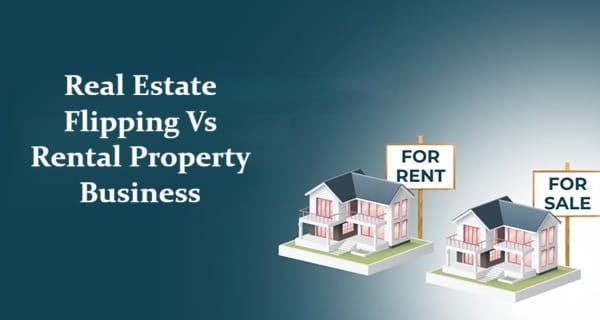
A rental property business follows a buy-and-hold approach. You purchase residential or commercial property, find tenants and earn recurring rent while hoping the property’s value also increases over the years.
Neither model guarantees profits. The right choice depends on your capital, patience, risk tolerance and willingness to actively manage properties.
Let’s break down the model step by step.
Breaking Down the Real Estate Flipping Model
How Does Real Estate Flipping Work?
A property flipper searches for a home that can be bought below its potential market value. It could be an old flat, a poorly maintained house, an urgent-sale property or a home whose interiors make it unattractive to normal buyers.
The investor buys the property and improves it through work such as:
- Painting and flooring
- Kitchen and bathroom upgrades
- Electrical and plumbing repairs
- Better lighting and fixtures
- Modern interiors and storage
The renovated property is then sold at a higher price. House flipping therefore depends heavily on buying at the right price rather than simply hoping property prices will rise.
Imagine purchasing an old flat for ₹60 lakh, spending ₹7 lakh on renovation and another ₹4 lakh on registration, loan interest, maintenance and selling expenses. If the flat eventually sells for ₹82 lakh, the apparent ₹22 lakh difference becomes only about ₹11 lakh before applicable taxes.
That is why every cost matters.
Revenue and Profit Margins
Flippers earn almost all their income when the property is sold.
Profit = Selling Price – Purchase Price – Renovation – Financing – Holding Costs – Selling Expenses – Taxes
There is no dependable all-India guaranteed flipping margin. Some investors may target around 15% to 25% net profit on a successful deal, but actual results vary sharply by city, purchase discount, renovation cost and selling time.
Even a good-looking margin can disappear if the project gets delayed.
Major Risks and Challenges
Market timing risk: You may complete renovation just when property demand weakens.
Renovation overruns: A ₹5 lakh renovation can become ₹8 lakh after plumbing, waterproofing or structural problems appear.
Tax: For property held as a capital asset, land or buildings held for 24 months or less are generally treated as short-term capital assets. Short-term capital gains are normally taxed at the investor’s applicable income-tax rates.
Holding costs: Until the house is sold, the investor may continue paying loan interest or EMIs, maintenance charges, utilities and property-related expenses.
Liquidity risk: A property cannot always be sold immediately. Finding a buyer at the expected price may take months.
Frequent property trading can also have different tax treatment depending on how the activity is structured, so regular flippers should take professional tax advice.
Breaking Down the Rental Property Business Model
How Does It Work?
Rental-property investors buy a flat, house, shop, office or other property and lease it to tenants.
Instead of depending on one profitable sale, they aim to create recurring income.
For example, someone may buy a ₹75 lakh apartment and rent it to a working family for ₹25,000 a month. The rent provides regular cash flow while the owner continues holding an asset that may appreciate over time.
Revenue and Profit Margins
Rental investors have two main potential sources of return:
- Monthly rental income
- Long-term property appreciation
Residential rental yields in many Indian markets commonly fall around 2% to 4%, although individual properties can produce more or less.
Commercial property generally produces higher rental yields. A broad 6% to 9% range is possible for good commercial assets, although location, lease quality, vacancy and property type can push actual yields outside that range.
Remember that gross rental yield is not pure profit. Maintenance, taxes, repairs and vacant periods reduce the owner’s actual return.
Major Risks and Challenges
Rental property is not completely passive. Owners may face:
- Tenants who delay or stop paying rent
- Empty periods between tenants
- Plumbing, electrical and structural repairs
- Society maintenance charges
- Property taxes and insurance
- Tenant disputes and property-management work
It is also a slow wealth-building model. A residential property generating a 3% annual rental yield will not recover its purchase price through rent quickly. Much of the long-term return may depend on property appreciation.
Head-to-Head Comparison: Which is Better for You?
Income Velocity and Cash Flow
Flipping can generate a large amount of money from one successful transaction. An investor may put ₹70 lakh into a project and recover the capital plus profit within several months.
But there is no monthly income while the property is waiting to sell.
Rental property is almost the opposite. The owner receives smaller amounts regularly. Over many years, rents can rise and the income can be reinvested, while the underlying property remains an asset.
Risk and Market Dependence
Flipping is more sensitive to short-term property prices.
If you expect to sell for ₹1 crore but buyers are offering only ₹90 lakh, the entire project’s economics can change.
Rental investors can often wait through weaker property markets because rent continues to provide some income. Property and rental values may also rise over long periods with inflation, although neither appreciation nor rent increases are guaranteed.
Active Effort vs. Passive Income
Flipping is an active business.
You may have to negotiate purchases, supervise contractors, control renovation budgets, arrange approvals where needed, stage the property, deal with brokers and negotiate the final sale.
Rental property can become semi-passive once a dependable tenant occupies the property. However, maintenance, rent collection, lease renewals and occasional vacancies still require attention.
Conclusion
Real Estate Flipping and Rental Property Business can both create wealth, but they suit different types of investors.
Real Estate Flipping is better suited to active investors seeking faster capital growth and who are comfortable handling renovation projects, contractors, market timing and the risk that a property may take longer than expected to sell. It can recycle capital more quickly after a successful sale, but property should never be treated as guaranteed short-term liquidity.
Rental Property Business is better suited to patient investors focused on long-term wealth creation, steady cash flow and future retirement income. Returns may build slowly, especially in residential property, but the investor keeps ownership of an income-producing asset that may appreciate over time.
In simple terms, flipping tries to create value quickly and sell it, while rental investing tries to own value for years and earn from it repeatedly. The better model is the one that matches your available capital, time commitment and ability to absorb periods when real estate does not perform exactly as planned.